Leave Your Message

Top Electric French Fry Slicer Suppliers for Global Buyers

Choosing the right Electric French Fry Slicer can influence production speed, cut consistency, food safety, and long-term operating costs. For global buyers, supplier selection requires more than comparing catalog prices. Machine quality, factory experience, export capability, and responsive technical support all deserve careful attention.

This guide introduces leading suppliers that serve restaurants, food processors, catering companies, and commercial kitchens worldwide. It examines practical details, including stainless-steel construction, blade durability, cutting dimensions, motor performance, safety switches, and cleaning access. Buyers should also confirm voltage compatibility, plug standards, packaging strength, spare-parts availability, and installation guidance before placing an order. Small details matter.

A reliable supplier should provide clear specifications, product videos, inspection records, and realistic delivery information. Experience with international shipments can reduce misunderstandings involving documentation, protection, and after-sales service. However, no supplier is perfect for every operation. A compact kitchen may value simple maintenance, while an industrial processor may require continuous output and customized configurations. Buyers must test assumptions against actual workflow, potato size, moisture levels, and daily volume.

This overview is designed to support informed comparison rather than promote one universal choice. Supplier reputation matters. So does evidence. Request samples, review warranty terms, and ask how quickly common wear parts can be replaced. Some advertised capacities may reflect ideal conditions, not ordinary production. That deserves reflection. A dependable Electric French Fry Slicer should deliver consistent results, safe operation, and measurable value across its working life.
Top Electric French Fry Slicer Suppliers for Global Buyers

Electric French Fry Slicers: Definition, Functions, and Main Types

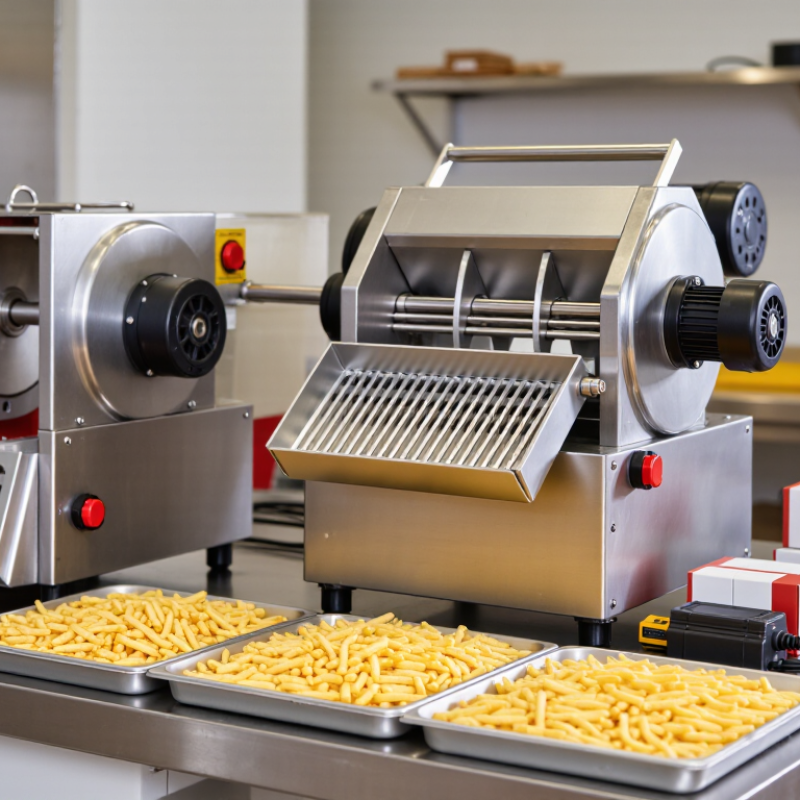
An electric French fry slicer is a powered food-processing machine that cuts potatoes into uniform sticks. Unlike a manual cutter, it uses a motor to drive sharp cutting blades. Operators place prepared potatoes into a feed chamber, then activate the cutting cycle. The machine can produce straight, thin, or thicker fries, depending on the blade assembly. Consistent cuts matter. They help fries cook at similar speeds and reduce unnecessary waste.

The main types include push-through slicers, continuous-feed slicers, and multi-blade commercial models. Push-through units suit small kitchens and limited production. Continuous-feed machines support busy restaurants, catering facilities, and processing lines. Some models offer interchangeable blades for different dimensions, such as 6 mm, 9 mm, or 12 mm cuts. Larger systems may include automatic feeding and discharge conveyors. More output can mean more cleaning. That trade-off deserves careful attention.

Global buyers should examine motor power, voltage compatibility, stainless-steel construction, blade access, and cleaning procedures. A reliable supplier should provide operating instructions, maintenance guidance, test samples, and clear replacement-part information. Ask how the slicer performs with different potato sizes. Request a practical demonstration when possible. A machine may look efficient in a brochure but behave differently under real kitchen pressure. In my experience, simple controls and easy sanitation often matter more than extra features. Noise, vibration, and operator fatigue also deserve inspection before purchase.
Key Factors for Comparing Global French Fry Slicer Suppliers

When comparing electric French fry slicer suppliers, global buyers should examine performance beyond attractive brochures. A reliable supplier provides test-cut results using different potato sizes, not only ideal samples. Check cutting capacity in kilograms per hour, slice consistency, and recovery after continuous operation. A machine that produces perfect strips for ten minutes may struggle during a full production shift.

Electrical compatibility deserves careful attention. Confirm voltage, frequency, motor protection, and plug configuration for the destination market. Stainless steel contact surfaces, sealed controls, and practical cleaning access can reduce maintenance problems. Ask for measurable protection ratings rather than accepting vague claims. Documentation matters too. Installation guides, wiring diagrams, operating instructions, and spare-parts lists show stronger technical control.

Supplier evaluation should include response quality and after-sales support. Request a clear warranty scope, replacement-blade availability, and realistic delivery times. A capable supplier should explain blade life, sharpening limits, and safe operator procedures without avoiding difficult questions. Compare total ownership cost, including freight, consumables, training, and downtime. The lowest quotation can become expensive after one damaged motor or delayed component.

Do not ignore factory verification. Live video tests, inspection reports, and sample production records provide useful evidence. Still, remote demonstrations have limits. They may not represent your potatoes, workflow, or cleaning routine. A small pilot order is often wiser than a large commitment. Supplier claims should be checked against measurable results, because even experienced buyers can overvalue polished presentations.

Manufacturing Standards, Certifications, and Quality Control

Global buyers should evaluate electric French fry slicer suppliers through documented manufacturing standards, not attractive product photos. A reliable factory usually operates an ISO 9001 quality system with controlled purchasing, production records, and corrective-action procedures. Stainless steel food-contact parts should meet the destination market’s material requirements. Common references include EU food-contact rules or applicable United States regulations.

Certification must match the sales region. CE marking may apply to machinery, electrical safety, and electromagnetic compatibility in the European market. Other destinations may require different approvals, such as UKCA or recognized electrical testing. Buyers should request current certificates, test reports, declaration documents, and certificate numbers. Check the issuing body. A copied logo proves little.

Quality control needs visible evidence. Inspectors should verify blade thickness, cutting size, weld smoothness, insulation, grounding, emergency stops, and water resistance. Each machine should receive electrical and functional testing before shipment. Batch numbers, inspection photographs, and calibration records improve traceability. During factory audits, I would also examine rejected parts and maintenance logs. They reveal more than a polished showroom. Small flaws matter. Suppliers may pass final testing while overlooking uneven cuts after extended operation. A practical buyer should request sample testing with different potato sizes, measure output consistency, and review spare-blade availability. No certification replaces hands-on verification, and even a strong supplier needs periodic reassessment.

Supplier Evaluation: Capacity, Pricing, Support, and Delivery

When global buyers compare electric French fry slicer suppliers, capacity should mean more than a factory’s floor area. Ask for monthly output, current order volume, and production records for similar machines. A practical supplier can explain motor testing, blade alignment, and final inspection procedures. Request sample photos and a live video test. Numbers matter.

Pricing requires careful comparison. A low quotation may exclude spare blades, export packaging, installation guidance, or inspection fees. Build a line-by-line cost sheet covering the slicer, voltage configuration, freight, insurance, and replacement parts. Confirm whether the price is fixed during the quotation period. I have seen small omissions create larger purchasing costs. That mistake is easy to repeat.

Support often separates a workable supplier from a frustrating one. Check response times before placing an order, not after a problem appears. Ask for wiring diagrams, operating manuals, troubleshooting steps, and technician availability. Delivery promises should include production time, inspection time, and port handover details. Request a packing list with dimensions and gross weight. A realistic supplier will mention possible delays, rather than guarantee perfect timing. Leave room for review. Track actual lead times across several orders, because one successful shipment proves little. Suppliers that document changes clearly are easier to manage across borders.

Import Considerations for International Commercial Buyers

Top Electric French Fry Slicer Suppliers for Global Buyers

International buyers should evaluate electric fry slicers beyond the purchase price. FAOSTAT reports that global potato production exceeded 370 million tonnes in 2022. That volume supports steady demand, but local operating conditions vary sharply. Confirm voltage, frequency, plug configuration, and motor protection before requesting a quotation. A machine built for 230 V may need redesign for a 110 V facility. Small details matter.

Ask suppliers for clear technical files. These should include food-contact material declarations, electrical test reports, operating manuals, spare-part lists, and cleaning instructions. ISO 12100 risk-assessment principles and applicable IEC machinery standards provide useful reference points. Importers should also verify customs classification, country-of-origin documents, packaging dimensions, and Incoterms. UN Comtrade data can help compare import patterns and freight exposure by market. PMMI’s 2023 food-processing outlook also highlights labor pressure and automation demand, making throughput and operator safety important purchasing measures.

Request performance data using the same potato size and cutting specification. A quoted capacity can look impressive. It may exclude loading, trimming, and cleaning time. Ask for a video test or an independent inspection. Stainless steel construction is valuable, but weld quality and blade access deserve closer attention. I would also calculate the cost of replacement blades, downtime, and technical support over three years. The cheapest offer often becomes expensive after the first failure. That assumption still needs checking.

Top Electric French Fry Slicer Suppliers for Global Buyers - Import Considerations for International Commercial Buyers
Supplier Category Typical Commercial Application Typical Throughput Common Motor Rating Cut Sizes Construction and Safety Features Common Export Certifications Key Import Considerations
Compact countertop equipment suppliers Small restaurants, cafés, food trucks, test kitchens, and low-volume catering operations Approximately 80–180 kg/h, depending on potato size, operator loading, and cut specification Approximately 0.25–0.75 kW Commonly 7–12 mm; interchangeable cutting grids may be available Stainless-steel food-contact areas, removable pusher, guarded feed opening, non-slip feet, and basic overload protection CE marking for applicable European-market machinery; electrical documentation should match the destination market Confirm countertop dimensions, plug type, frequency, crate protection, spare cutting grids, and cleaning instructions
Mid-capacity commercial machine suppliers Independent restaurants, pubs, hotels, institutional kitchens, and regional foodservice distributors Approximately 150–400 kg/h under normal operating conditions Approximately 0.55–1.50 kW Usually 9–14 mm, with optional specialty grids on selected configurations 304 stainless-steel contact surfaces are common; interlocked covers, emergency stop, thermal protection, and removable blades are preferred CE documentation, electrical test reports, and destination-specific declarations where required Request measured output tests, motor duty rating, replacement-blade availability, pallet dimensions, and total shipping weight
High-throughput floor-standing suppliers Central kitchens, hotel groups, commissaries, large restaurants, and institutional meal production Approximately 300–800 kg/h, subject to potato feed consistency and operator workflow Approximately 1.10–2.20 kW Typically 9–16 mm; multiple cutting assemblies may be offered Heavy-duty stainless-steel frame, large feed chamber, safety interlocks, emergency stop, overload protection, and adjustable feet or casters CE or other applicable conformity documentation; food-contact material declarations may be requested by buyers Check floor loading, working height, doorway clearance, installation requirements, noise level, and local electrical protection
Industrial continuous-processing suppliers Frozen-fry processors, prepared-food factories, institutional production lines, and contract food manufacturers Often above 800 kg/h; actual performance depends on feed system, potato dimensions, and downstream equipment Approximately 2.20–7.50 kW or higher for integrated lines Commonly 7–16 mm, with custom cutting systems and automated feed options Sanitary stainless-steel design, washdown-compatible construction, interlocked access panels, machine guarding, and line integration controls Machinery conformity documentation, electrical schematics, risk assessment, and food-contact declarations may be required Evaluate line compatibility, PLC and control-voltage requirements, sanitation procedures, commissioning support, and spare-parts planning
Custom OEM and private-label suppliers Importers, distributors, multi-site foodservice groups, and buyers requiring customized electrical or mechanical specifications Usually based on the selected platform; commonly 100–800 kg/h Approximately 0.55–3.00 kW for common commercial configurations 7–16 mm is common; custom grid dimensions should be confirmed before production Options may include customized housing, control panels, branding-free packaging, modified infeed, and destination-specific safety components Documentation varies by destination and configuration; conformity claims should be supported by test records Define technical drawings, minimum order quantity, sample approval, tooling responsibility, inspection standards, and warranty scope in the contract
Regional distributor and service-network suppliers Buyers prioritizing local installation, training, maintenance, and fast replacement-part access Depends on the selected model; typically 150–800 kg/h Approximately 0.55–3.00 kW Usually 9–16 mm, with locally stocked standard grids on selected models Commercial stainless-steel equipment, documented maintenance procedures, safety guarding, and serviceable wear components Destination-market conformity documents and local electrical approval may be available Compare landed cost with local service fees, response times, warranty exclusions, training, and availability of cutting assemblies
Used and refurbished equipment suppliers Start-up kitchens, budget-conscious operators, seasonal facilities, and buyers needing short-term capacity Depends on model condition; commonly 100–600 kg/h Approximately 0.55–3.00 kW Often 7–16 mm, but the supplied grid may be worn or incomplete Condition varies; inspect guards, switches, motor insulation, blade sharpness, welds, seals, and food-contact surfaces before purchase Original documentation may be incomplete; refurbished units may require additional destination-market evaluation Budget for inspection, replacement parts, electrical conversion, sanitation refurbishment, insurance, and limited warranty coverage
Technical figures are typical commercial-market ranges rather than guaranteed specifications. Buyers should verify throughput using the intended potato variety and cut size, and confirm voltage, frequency, plug configuration, conformity documents, customs classification, packaging, warranty, and after-sales support before placing an international order.