Best French Fries Processing Line for Efficient Production?
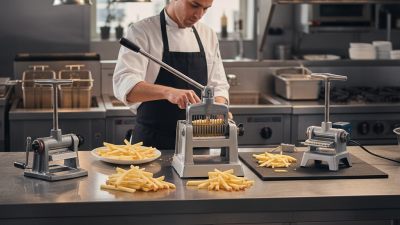
In the competitive world of food production, the demand for high-quality French fries is ever-increasing. A well-designed French Fries Processing Line can significantly enhance production efficiency. This specialized equipment not only ensures uniform cooking but also maintains the appealing taste customers love.
Selecting the right processing line involves several factors. It's essential to consider the capacity, technology, and energy efficiency of the machinery. A high-quality French Fries Processing Line minimizes waste and maximizes output, providing a swift return on investment. Industry experts recommend lines that incorporate state-of-the-art frying, seasoning, and packaging technologies.
However, not all processing lines are created equal. Businesses must assess their unique needs. There are potential pitfalls in choosing equipment that does not align with production goals. It's crucial to seek advice from industry specialists to avoid costly mistakes. Drawing from experience and knowledge can lead to better choices and improved productivity.
Overview of French Fries Processing Lines
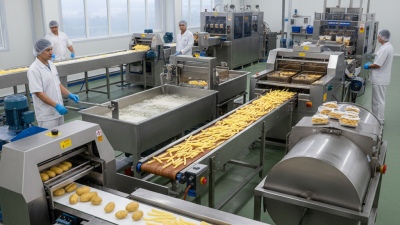
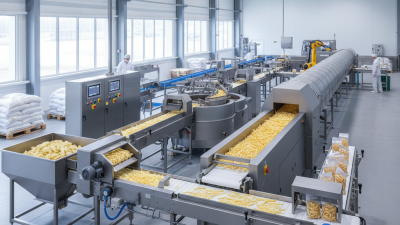
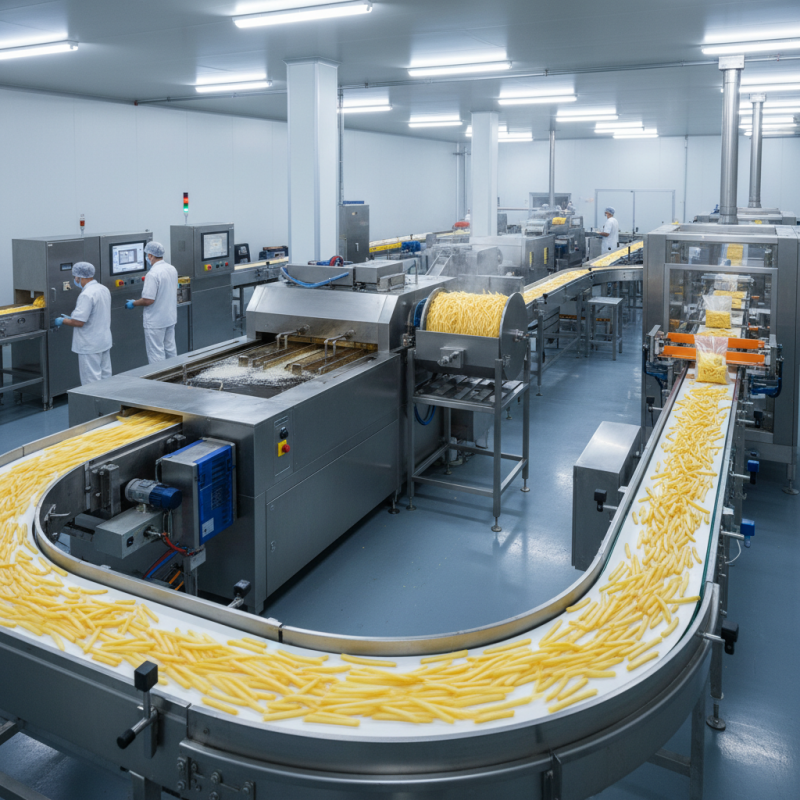
French fries are a staple food enjoyed worldwide. The processing line for producing these crispy delights is crucial for achieving high efficiency and quality. An ideal French fries processing line should incorporate several stages: washing, peeling, cutting, frying, and cooling. Each stage plays a vital role in maintaining flavor and texture.
Washing and peeling are the initial steps. Fresh potatoes are thoroughly washed to remove dirt. After that, peeling can be done mechanically or chemically. The peeling method chosen impacts the texture of the fries. Next, cutting the potatoes into uniform pieces ensures they cook evenly. The precision of cutting machines can significantly influence the final product's quality.
Once cut, the next focus is frying. Consistent oil temperature is vital in producing crispy fries. Improper frying can lead to soggy or burnt fries. Innovations in frying technology, such as vacuum frying, are gaining attention to enhance product quality. Finally, cooling is essential to maintain freshness. The entire processing line requires regular maintenance and operator training to ensure optimal output. Balancing cost efficiency with high-quality production still poses challenges in the industry.
Key Components of a French Fries Processing Line
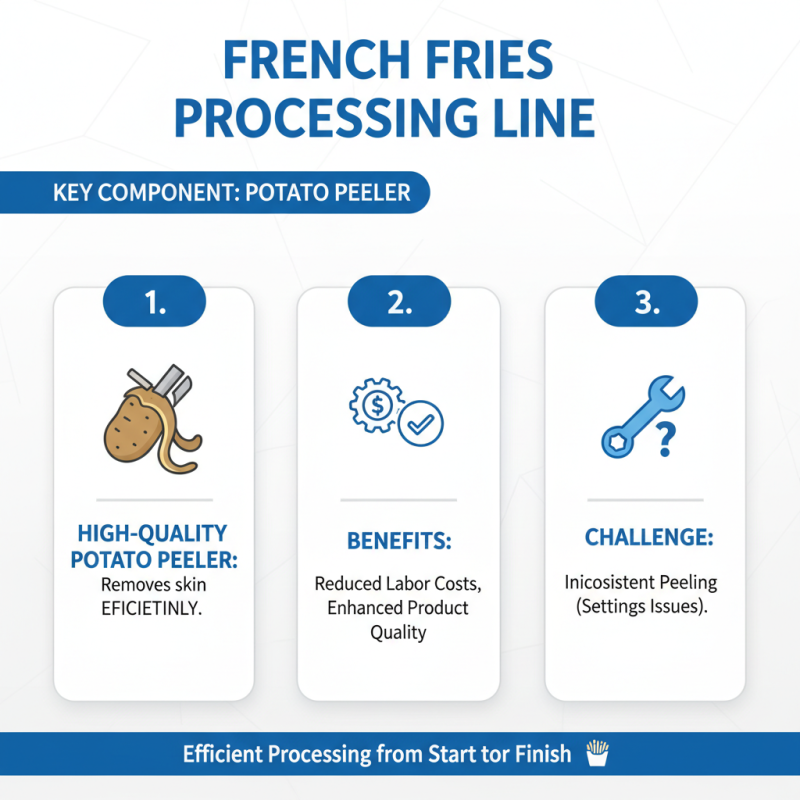
When discussing a French fries processing line, key components play a crucial role in ensuring efficiency. The process begins with a high-quality potato peeler. This device removes the skin effectively without wasting the potato. A well-designed peeler can reduce labor costs and enhance product quality. However, some operators struggle with the settings, leading to inconsistent peeling results.
After peeling, the potatoes typically pass through a cutting machine. This is where uniformity matters. Ideal French fries have consistent sizes, ensuring even cooking. Unfortunately, some machines may produce uneven cuts. Operators must regularly check the blades and calibrate settings. This maintenance can be overlooked, causing issues in the final product.
Next, blanching is essential for retaining color and texture. Blanching machines help in this process by heating the fries briefly. However, the timing must be precise. A minute too long can result in mushy fries. Yet, if done correctly, this step significantly enhances the fries' quality. Reflecting on the entire process, attention to detail at each stage is vital for a successful French fries line.
Steps in the French Fries Production Process
The production of French fries involves multiple crucial steps that ensure quality and efficiency. First, selecting high-quality potatoes is essential. They should be firm and have fewer imperfections. This choice impacts the final product's taste and texture. After selection, the potatoes are thoroughly washed and peeled. This step removes dirt and any undesirable skin. It's a straightforward process, yet it requires attention to detail to prevent loss of quality.
Next, the potatoes are cut into uniform shapes. Consistency in size ensures even cooking and crunchiness. The cuts can be thicker or thinner based on consumer preferences. Once cut, the fries undergo blanching. This process helps preserve color and texture. It also reduces cooking time later. However, if not timed properly, blanching can alter the fries' flavor.
Finally, the fries are dried and fried. Drying is often overlooked but is vital. Excess moisture during frying can lead to soggy fries. The frying temperature must be carefully monitored. Overheating can darken the fries too quickly, while undercooking leaves them raw inside. Throughout the process, reflecting on each step can lead to improvements in efficiency and quality. Each phase offers lessons that can fine-tune the production line for better results.
Best French Fries Processing Line for Efficient Production
| Step No. |
Processing Step |
Description |
Machinery Involved |
Est. Time Required |
| 1 |
Raw Potato Preparation |
Sorting and cleaning the potatoes to remove dirt and blemishes. |
Potato Washers |
30 mins |
| 2 |
Peeling |
Removing the skin of the potatoes. |
Potato Peelers |
10 mins |
| 3 |
Cutting |
Slicing potatoes into desired fry shapes. |
French Fry Cutters |
15 mins |
| 4 |
Blanching |
Cooking the cut fries in hot water to deactivate enzymes. |
Blanching Tanks |
5 mins |
| 5 |
Drying |
Removing excess moisture from the blanched fries. |
Drying Machines |
10 mins |
| 6 |
Frying |
Frying the dried fries in hot oil. |
Frying Machines |
5 mins |
| 7 |
Cooling |
Allowing the fries to cool before packaging. |
Cooling Conveyors |
10 mins |
| 8 |
Packaging |
Packaging the cooled fries for distribution. |
Packaging Machines |
15 mins |
Efficiency Considerations in Fry Processing Technology
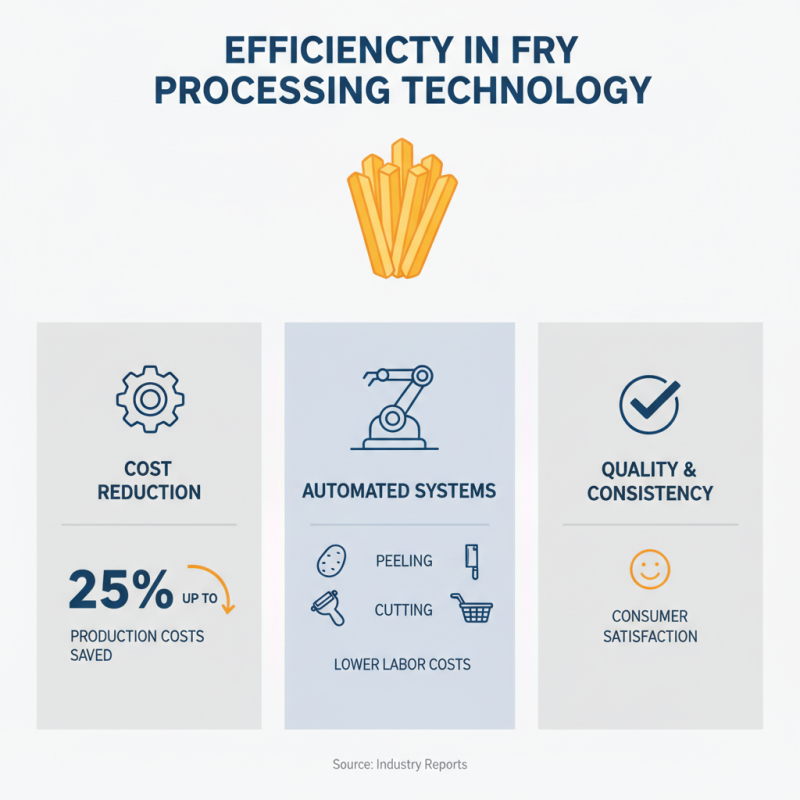
When it comes to French fries production, efficiency is crucial. According to industry reports, up to 25% of production costs can be reduced with the proper fry processing technology. Automated systems for peeling, cutting, and frying can drastically lower labor costs. These technologies often enhance consistency and quality, which are vital for consumer satisfaction.
However, adopting advanced technology is not without challenges. Equipment can be expensive, and maintenance can lead to downtime. Reports indicate that maintenance issues can account for 15% of lost production time. Companies must carefully weigh these factors when considering upgrades to their processing lines. Smart investments in technology can yield long-term savings, but the upfront costs can deter smaller operators.
Additionally, energy consumption is a significant concern. The right processing line can improve energy efficiency, which is vital in a time of rising energy costs. A report from the Food Industry Association noted that energy-efficient fryers can reduce energy consumption by up to 30%. This shift has become more important as sustainability pressures mount in the food industry. Balancing cost, efficiency, and sustainability requires ongoing reflection and adaptation in fry processing.
Best Practices for Maintaining Production Line Performance
Maintaining the performance of a French fries processing line is crucial for efficiency. Regularly inspecting equipment helps prevent breakdowns. Ensure that all machine parts are clean and free of debris. An unclean machine can lead to food safety issues. Routine checks can identify wear and tear early, avoiding major repairs.
Training staff in best operational practices is vital. Employees should understand how each machine operates and the importance of their role. Encourage them to report any irregularities quickly. This promotes a proactive approach to maintenance.
Moreover, record keeping is essential. Documenting machine performance can provide insights into operational efficiency.
Consider investing in scheduled maintenance. It ensures that every part of the production line is consistently checked. This plan ideally includes both preventative measures and immediate repairs as needed. Yet, even the best teams can overlook signs of wear.
Continuous improvement should be a focus. Encouraging feedback from workers can uncover areas for enhancement. Regular revisiting of processes keeps operations running smoothly.