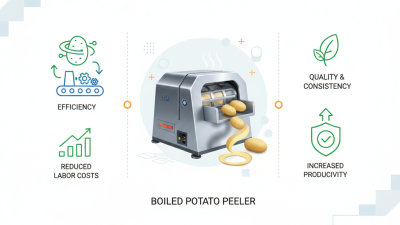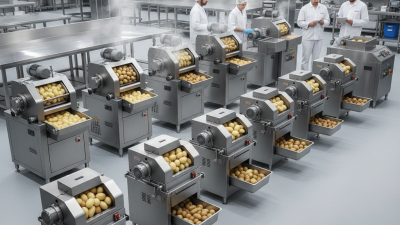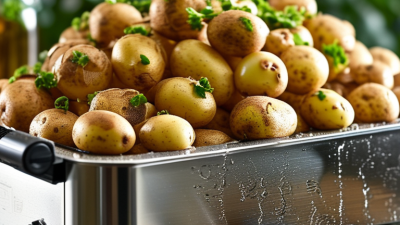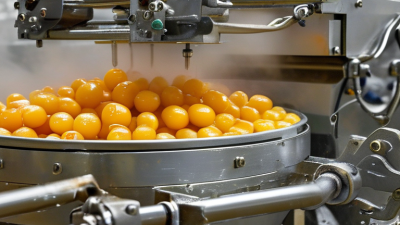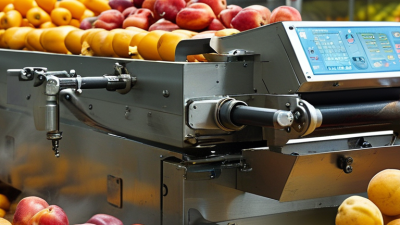
An Automatic Steam Peeler removes skins from vegetables and fruits through controlled heat, pressure, and rapid expansion. It is commonly used for potatoes, carrots, beets, tomatoes, and similar products. Unlike abrasive peeling, it can reduce deep cuts and protect more usable flesh.
Food-processing engineer Dr. R. Paul Singh describes the central goal clearly: “Efficient processing should remove the unwanted layer while preserving the valuable food beneath it.” This principle explains why steam peeling depends on precise timing, not heat alone. Inside the machine, pressurized steam quickly heats the outer skin. The product remains exposed for only a short period. Pressure then drops rapidly, causing moisture beneath the skin to expand. The loosened skin cracks and separates.
The process is fast.
Rotating rollers, water jets, or brushes remove the softened skin afterward. Operators adjust steam pressure, exposure time, product size, and cooling conditions. A large potato may need different settings from a small tomato. Poor calibration can leave patches behind or create unnecessary product loss.
That is where real experience matters. A machine may perform well in a factory trial, yet behave differently with seasonal crops. Skin thickness, moisture, temperature, and storage history all influence the result. This limitation deserves attention.
An Automatic Steam Peeler is therefore more than a heated pressure vessel. It is a coordinated system involving thermal control, mechanical separation, sanitation, and quality inspection. Understanding how each stage works helps processors choose suitable equipment and evaluate peeling efficiency realistically.
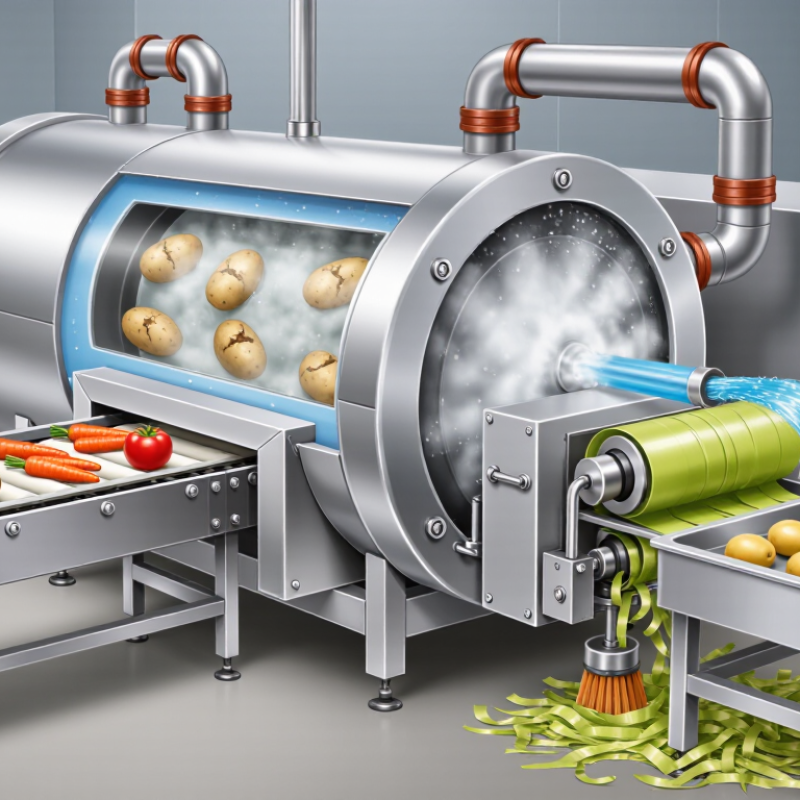
An automatic steam peeler removes skins from firm fruits and vegetables using heat, pressure, and controlled mechanical action. It commonly peels potatoes, carrots, sweet potatoes, beets, and some pumpkins. It is not designed for leafy vegetables or very soft produce.
Inside the chamber, high-pressure steam heats the outer skin quickly. The skin expands, weakens, and separates from the flesh. A sudden pressure release helps loosen it. Rotating paddles, brushes, or water jets then remove the softened skin. Sensors can adjust steam time, pressure, and product flow. The right setting depends on crop variety, size, moisture, and maturity.
This process matters because excessive peeling removes valuable edible flesh. The FAO’s State of Food and Agriculture 2019 estimated that 14% of food is lost between harvest and retail. The UNEP Food Waste Index Report 2024 estimated 1.05 billion tonnes of food waste in 2022. Better peeling may reduce avoidable losses, though the machine is not magic. A poorly tuned cycle can leave skin behind or waste the center of a potato. Operators should check peel depth, product temperature, and wastewater regularly. Small adjustments often matter.
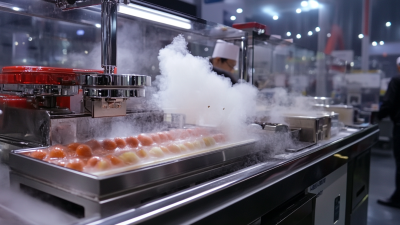
An automatic steam peeler removes skins by combining heat, pressure, and controlled release. Its main body is a sealed steam chamber built from food-grade stainless steel. A feed conveyor carries potatoes, carrots, or similar produce into the chamber at a steady rate. Inside, steam injection valves distribute high-temperature steam around each item, rather than heating only one surface.
The pressure sensor monitors chamber conditions continuously. A programmable controller adjusts steam time, pressure, and discharge timing. When the outlet valve opens, pressure falls quickly. This sudden change loosens the softened skin from the produce surface. A rotating drum, abrasive section, or air-assisted separator then removes the detached skin. The exact arrangement depends on the product’s size and firmness.
Small details affect real performance. Uneven loading can leave some skins attached. Operators may need to adjust conveyor speed after inspecting the peeling chamber. The discharge system separates peeled produce from skin waste and reduces manual sorting. Spray nozzles support cleaning, while door locks and pressure interlocks protect workers during operation. Steam traps also help manage condensation and energy loss.
The process is efficient, but not perfect. Fragile produce may suffer surface damage, while thick-skinned batches may require longer treatment. Excessive steam can waste energy and reduce yield. Regular sensor checks, seal inspections, and trial runs are necessary. A reliable machine is not simply automatic; it must respond to changing raw materials.
An automatic steam peeler uses heat and pressure to loosen the thin outer skin of produce. Fruits or vegetables move into a sealed chamber, where pressurized steam surrounds their surfaces. The treatment is brief, often lasting only seconds. Timing matters.
Steam heats the skin and the shallow layer of moisture beneath it. When the chamber pressure drops quickly, that moisture expands and partly flashes into vapor. The sudden change helps lift the skin away from the flesh, rather than cooking the whole piece. A rinse, brush, or rotating surface can then remove the loosened peel. On a tomato, the skin may split and slip off in soft strips.
The process needs careful adjustment. A potato and a peach do not respond alike, and size, ripeness, and surface condition all affect the result. Too little exposure leaves stubborn patches; too much can soften the outside and waste edible flesh. Operators monitor pressure, temperature, and dwell time, then check samples for peeling quality and texture. It is an efficient method, but not a perfect one: uneven produce can still leave uneven results. Safety interlocks and pressure-rated equipment are essential because the chamber holds hot steam under pressure.
An automatic steam peeler begins with a measured batch of produce, often potatoes or root vegetables, entering a pressure-rated vessel.
A feed gate closes, and the system checks that the door is sealed before steam enters. Operators set exposure time and pressure for the crop and its condition.
Size matters. A batch of mixed sizes may peel unevenly, even when the controls are set correctly.
During the peeling stage, hot steam contacts the produce surface while the vessel rotates or tumbles the load.
This helps distribute heat around each piece. The goal is to loosen the thin outer skin without cooking too deeply into the flesh.
Sensors monitor operating conditions, but they cannot make every item identical. Older produce, bruises, and irregular shapes can change the result.
That part is easy to overlook.
At the end of the cycle, the vessel releases pressure quickly.
The sudden pressure drop helps lift loosened skin from the surface. A discharge door then moves the batch to a peeling separator, where loosened skins are carried away, often with water or airflow.
The peeled produce continues to inspection or further processing. Staff check for remaining patches and excessive flesh loss, then adjust settings if needed.
A small change in exposure time can matter. The best cycle is found through careful observation, not guesswork alone.
An automatic steam peeler uses pressurized steam to loosen the skin before mechanical movement or water removes it. Peeling results depend on more than the machine’s cycle setting. Steam pressure, exposure time, and batch size all matter. Too little exposure leaves patches of skin behind; too much can soften the outer layer and waste usable flesh.
Produce affects performance, too. Potato variety, size, surface damage, and storage conditions can change how firmly the skin clings. A mixed batch of small and large potatoes may peel unevenly because each piece heats at a different rate. Clean steam nozzles and a well-maintained pressure system help keep cycles consistent. Still, settings that work today may need adjustment with a different crop. That part takes observation.
Tips: Test a small batch when produce changes. Check several pieces, including the largest ones, and look for leftover skin or excessive flesh loss. Keep loading levels consistent, and record pressure and cycle time. Small notes help. A worn seal or blocked nozzle can quietly affect results, so inspect them during routine cleaning.